
A Guide to Vertical and Horizontal Speaker Dispersion Patterns and Coverage Angle

Effective speaker coverage is crucial for a successful sound system setup. While there are complex formulas and software available to calculate sound coverage, factors such as room shape, ceiling height, and other variables make this process both an art and a science. Understanding speaker dispersion patterns and coverage angles, as well as selecting the appropriate speakers for the specific application, is essential.
We will examine various dispersion patterns and coverage angles, explaining what these terms mean and how they affect the sufficiency of your sound system's coverage.
What is a Dispersion Pattern?
A speaker dispersion pattern, also known as a sound projection pattern, is typically characterized by horizontal and vertical coverage patterns. It refers to the overall shape and direction of sound waves emitted by a speaker. This pattern of dispersion is determined by several factors, including the size and arrangement of the drivers, the crossover network and waveguides, which shape and control the direction of sound waves, as well as the physical size and shape of the speaker. The dispersion pattern then determines the speaker's coverage area, which can significantly affect the audio experience in a given space. For example, a wider dispersion pattern can cover more area.
Types of Dispersion Patterns
Different dispersion patterns are designed for different applications and environments. They ensure that sound is effectively delivered to the intended audience while minimizing issues such as feedback, reflections, and uneven coverage.
- Omnidirectional: Sound radiates equally in all directions, both horizontally and vertically.
- Conical: Sound is emitted in a cone-shaped pattern, providing equal coverage around the speaker's axis.
- Bidirectional: Sound is emitted equally in two opposite directions, with minimal output to the sides.
- Directional: Sound is focused in a specific direction with controlled dispersion.
- Vertical and Horizontal Dispersion: Different horizontal and vertical dispersion characteristics.
Vertical and Horizontal Speaker Dispersion
Some speakers are designed with distinct horizontal (width) and vertical (height) dispersion characteristics to optimize sound coverage and clarity in various environments. The horizontal dispersion pattern defines how wide the sound spreads across a room, while the vertical coverage pattern determines how sound is distributed above and below the speaker's position.
Horizontal Speaker Coverage
Horizontal coverage refers to the width at which the speaker projects sound. A wide horizontal dispersion pattern ensures that sound quality remains consistent for all audience members, regardless of their position. On the other hand, a narrower speaker dispersion limits sound to a specific area, minimizing reflections from side walls and preventing unwanted sound spread.
An important consideration with horizontal coverage is reaching all audience members on both sides of the venue with minimal overlap. Excessive overlap can create phasing issues due to sound-wave interference, leading to hotspots (areas with too much of a particular frequency, making them louder than others) or cancellation/dead spots (areas with not enough of a particular frequency, resulting in insufficient sound).
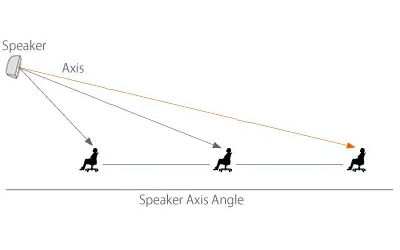
Vertical Speaker Coverage
Vertical coverage or dispersion refers to the height at which the speaker projects sound. Several factors affect this, including speaker height, speaker direction, and distance from the audience. It is crucial to find a balance between speaker placement and volume to ensure that sound reaches the back of the room and covers the entire area effectively.
A shorter vertical dispersion pattern helps control the vertical spread of sound by minimizing reflections from ceilings and floors. In contrast, a taller vertical dispersion is ideal for venues with tiered seating arrangements, ensuring consistent audio quality for listeners at varying heights and distances.
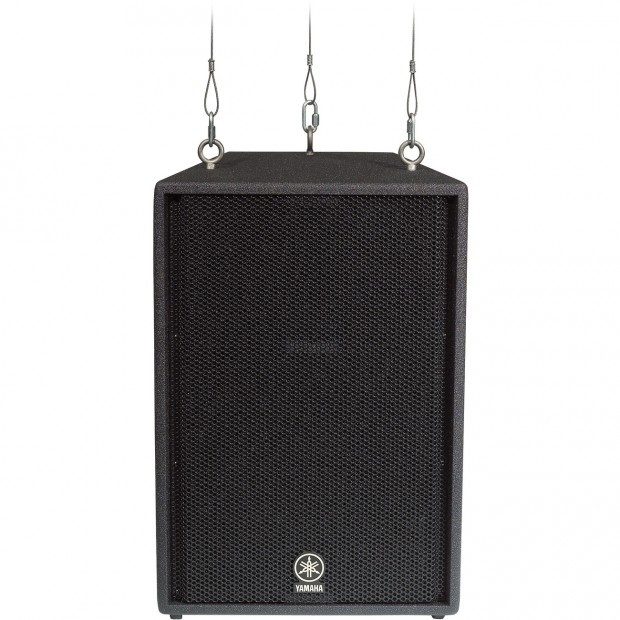
Speaker Coverage Angles
Coverage angle refers to the horizontal and vertical angles, usually measured in degrees, that define the area where sound levels remain consistent. For instance, the Yamaha C115VA 15" loudspeaker has a 90-degree by 40-degree coverage. This means sound levels stay consistent within a 90-degree horizontal and 40-degree vertical range. If you mount the speaker sideways, you rotate that coverage, giving you a 90-degree vertical angle instead.
Typical coverage angles for speakers are 90 by 40 degrees, but 90 by 60 degrees is also common, offering a slightly higher vertical spread. Other angles include 50 by 20 degrees, 60 by 60 degrees, or 90 by 90 degrees. Narrower angles, like 50 by 20 degrees, allow sound to travel farther while maintaining quality, making them ideal for situations such as broadcasting sound across a football field.
Consistent Coverage
To ensure even audio coverage in your space, it's best to maintain a variation of 6 dB or less in sound pressure level (SPL). By staying within this range, you can avoid excessively loud areas at the front and quiet spots at the back. While achieving complete consistency is challenging, the closer you can get to it, the more enjoyable the listening experience will be for your audience.
Speaker Coverage Challenges
Every venue comes with its own set of coverage challenges. For example, dance clubs with low ceilings may struggle to maintain high sound pressure levels at the back. Other challenges related to speaker coverage include achieving even sound distribution across different listening areas, managing sound reflections, and avoiding dead spots or areas with insufficient sound levels. In large or irregularly shaped spaces, it can be challenging to ensure consistent audio quality, resulting in uneven coverage. High ceilings or wide rooms can cause sound to dissipate or become unevenly distributed. Custom sound system designs with the appropriate speakers and strategic speaker placement can help address these issues.
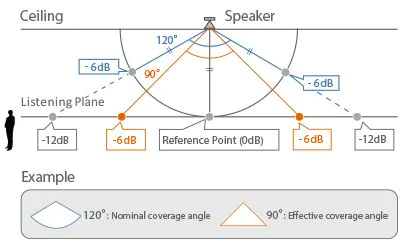
Ceiling Speaker Coverage Area
Ceiling speakers often have conical dispersion patterns, usually 100 degrees or 130 degrees, and some as high as 180 degrees. These speakers disperse sound evenly across the room, providing a consistent listening experience regardless of where you stand.
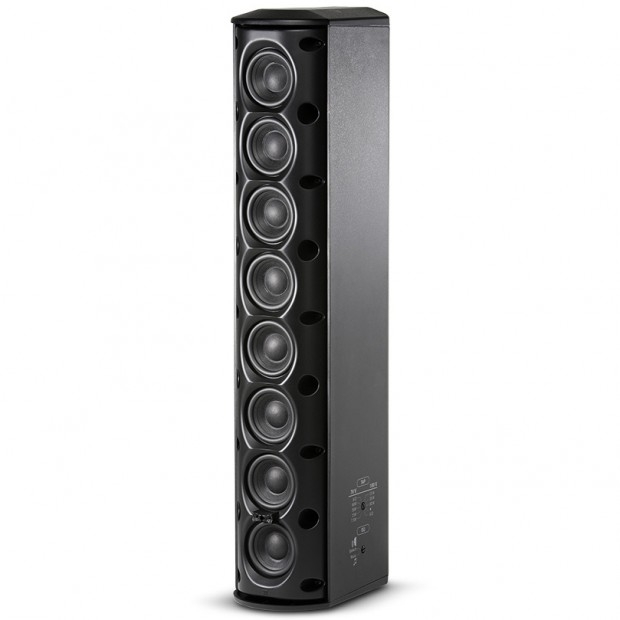
Line Array & Column Array Speakers
Line array and column array speakers provide consistent and even sound distribution over long distances and broad areas. Line arrays, consisting of multiple individual speakers arranged vertically, create greater vertical coverage, minimizing sound loss with distance. Column array speakers, a type of line array, are designed with a wide horizontal coverage angle but a narrow vertical angle. This design allows them to cover a broad horizontal area, providing consistent sound coverage across a wide space while focusing the sound vertically to minimize reflections off floors and ceilings.
Variable Dispersion Speakers
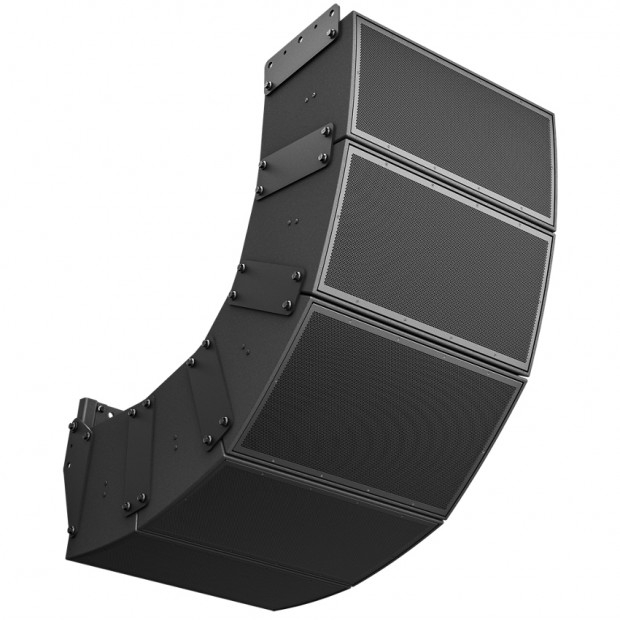
Variable dispersion speakers are specialized loudspeakers that consist of individual speaker boxes arranged in a banana shape. These speakers allow for tailored sound coverage by adjusting their horizontal and vertical dispersion angles through physical adjustments or electronic control. This design, often incorporating rotatable waveguides, enables precise control of sound direction, which is particularly useful for optimizing sound coverage. By ensuring consistent sound levels throughout the listening area, variable-dispersion speakers enhance the overall listening experience, improving speech intelligibility and reducing acoustic problems. Their customizable sound coverage makes them especially beneficial in large or acoustically challenging spaces, providing more flexible and effective sound distribution.
Use Your Ears
Regardless of the venue, speaker coverage angles, or dispersion patterns, fine-tuning your sound system requires using your ears. Walk around the space and listen. Ensure the speakers are pointed at the right location, avoid overly noisy areas, and adjust as necessary.
By understanding the types of dispersion patterns and applying these principles, you can achieve optimal speaker coverage for any sound system, enhancing the listening experience for your audience. When purchasing audio equipment, consult a professional to ensure you get the right coverage angle for your space.