
480 Products
-

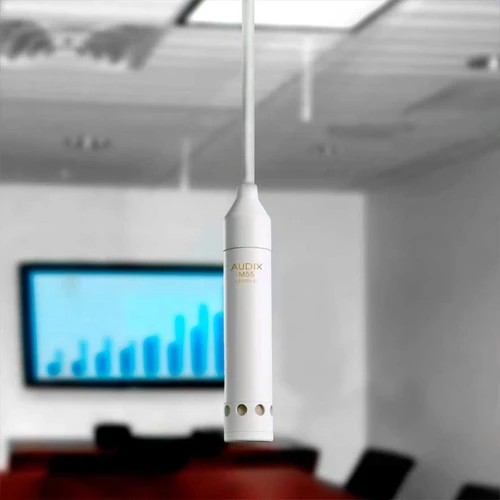
Conference Room Sound System with an SD5 SuperDispersion Ceiling Speaker Array, RMA240BT 240W Rack Mount Bluetooth Mixer Amplifier and 2 Hanging Microphones
Inside the Design This professional conference room microphone and speaker system delivers exceptional 360° audio coverage for meetings, presentations, and video conferencing applications. Featuring...MSRP: $3,083.26$2,548.96Usually arrives in 5-9 business days.
-


Background Music Sound System with 6 S5 Audio Indoor/Outdoor Surface Mount Speakers and 350W Rack Mount Bluetooth Mixer Amplifier
Inside the Design This weather-resistant background music speaker system combines six Pure Resonance Audio S5 4.5" commercial surface-mount speakers with an RMA350BT 350W rackmount Bluetooth mixer...MSRP: $1,894.11$1,617.69Usually arrives in 5-9 business days.
-

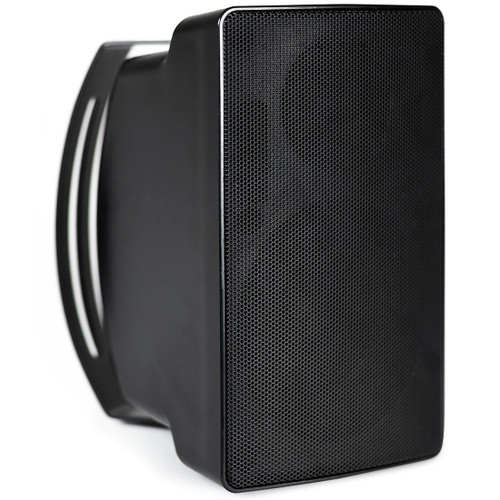
Retail Store Sound System with 2 Pure Resonance Audio Indoor/Outdoor Surface Mount Speakers, 8 PD4 Pendant Speakers and RMA240BT Rack Mount Bluetooth Mixer Amplifier
Inside the Design This indoor/outdoor retail sound system combines two Pure Resonance Audio S5 4.5" weather-resistant surface-mount speakers, eight PD4 4" pendant loudspeakers, and a powerful...MSRP: $2,763.99$2,286.99Usually arrives in 5-9 business days.
-
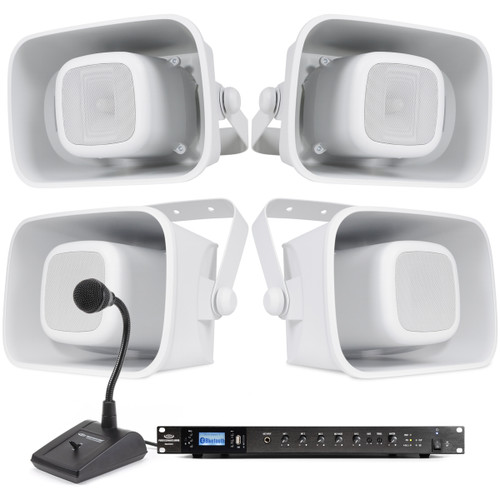
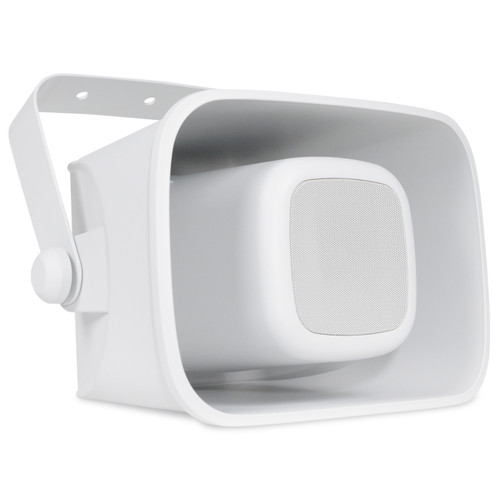
Outdoor Paging System with 4 H6 6.5" All-Weather Horn Speakers, RMA350BT 350W Rack Mount Bluetooth Mixer Amplifier and PTT1 Paging Microphone
Inside the Design This outdoor paging system is designed to provide clear and powerful audio coverage in demanding commercial environments. It includes four Pure Resonance Audio H6 6.5" 2-way...MSRP: $2,828.99$2,450.99Usually arrives in 5-9 business days.
-
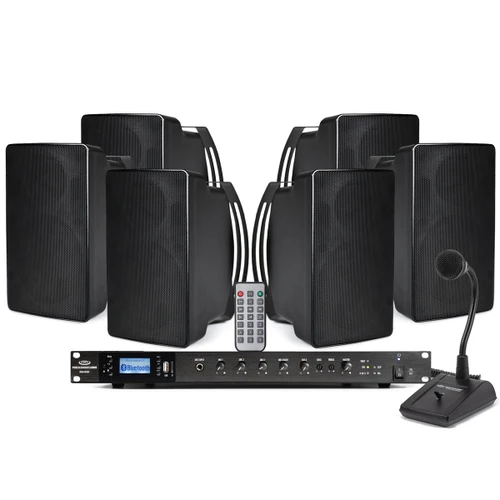
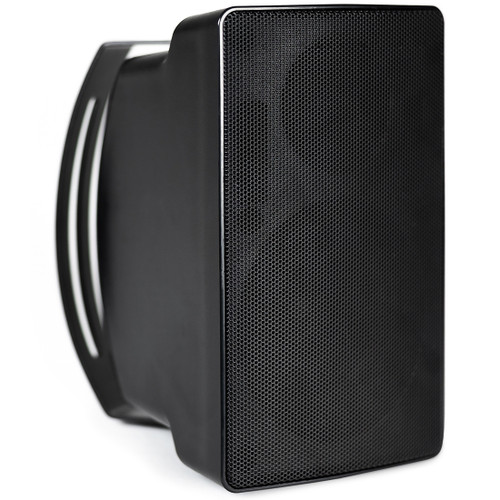
Paging Sound System with 6 Pure Resonance Audio S5 Indoor/Outdoor Surface Mount Speakers, RMA350BT Rack Mount Bluetooth Mixer Amplifier and Push-to-Talk Microphone
Inside the Design This 70V paging sound system delivers clear, intelligible audio for indoor and outdoor commercial applications. The IP65-rated S5 4.5" surface-mount speakers provide high-quality...MSRP: $2,089.99$1,724.99Usually arrives in 5-9 business days.
-


Warehouse Speaker System with 4 H6 6.5" All-Weather Horn Speakers, RMA350BT 350W Rack Mount Bluetooth Mixer Amplifier and PTT1 Paging Mic
Inside the Design This warehouse speaker system is designed to provide clear and powerful audio coverage in demanding warehouse environments. It includes four Pure Resonance Audio H6 6.5" 2-way...MSRP: $2,449.99$2,018.99Usually arrives in 5-9 business days.
-


Commercial Outdoor Speaker System with 8 Pure Resonance Audio S5 Indoor/Outdoor Surface Mount Speakers and RMA500BT Rack Mount Bluetooth Mixer Amplifier
Inside the Design This 70V all-weather outdoor speaker system combines eight 4.5" commercial outdoor speakers with a 500W rack mount Bluetooth mixer amplifier. The durable IP65 rated S5 surface mount...MSRP: $2,730.99$2,344.99Usually arrives in 5-9 business days.
-
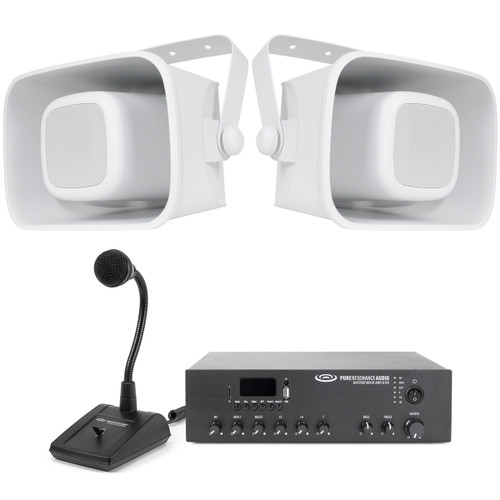

Warehouse Paging System with 2 H6 6.5" All-Weather Horn Speakers, MA120BT 120W Bluetooth Mixer Amplifier and PTT1 Paging Microphone
Inside the Design This warehouse paging system features two H6 6.5" 2-way full-range all-weather horn-loaded loudspeakers, delivering exceptional voice reproduction and wide dispersion for optimal...MSRP: $1,522.99$1,246.99Usually arrives in 5-9 business days.
-


Outdoor Speaker System with 2 H6 6.5" All-Weather Horn Speakers, MA120BT 120W Bluetooth Mixer Amplifier and PTT1 Paging Microphone
Inside the Design This outdoor speaker system features two H6 6.5" 2-way full-range all-weather horn-loaded loudspeakers, delivering exceptional voice reproduction and wide dispersion for optimal...MSRP: $2,075.99$1,852.99Usually arrives in 5-9 business days.
-
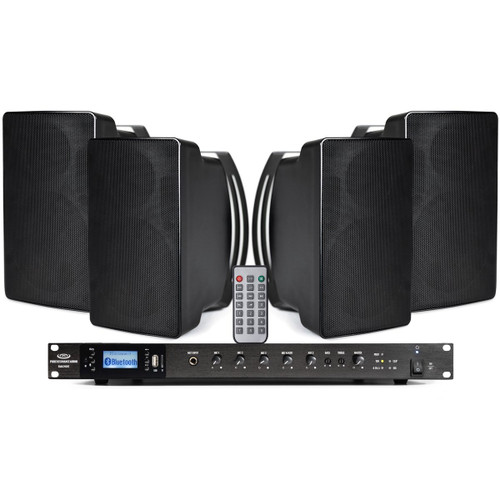
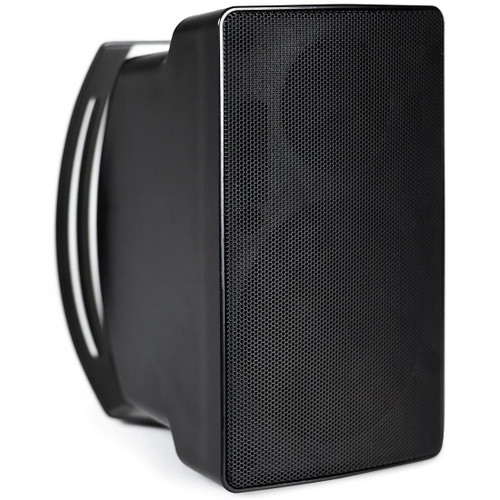
Commercial Outdoor Speaker System with 4 Pure Resonance Audio S5 Indoor/Outdoor Surface Mount Speakers and RMA240BT Rack Mount Bluetooth Mixer Amplifier
Inside the Design This weather-resistant speaker system combines four Pure Resonance Audio S5 4.5" commercial surface-mount speakers with a 240W RMA240BT rackmount Bluetooth mixer amplifier. The...MSRP: $1,789.99$1,560.99Usually arrives in 5-9 business days.
-


Commercial Outdoor Speaker System with 6 Pure Resonance Audio S5 Indoor/Outdoor Surface Mount Speakers and RMA350BT Rack Mount Bluetooth Mixer Amplifier
Inside the Design This 70V outdoor speaker system combines six 4.5" commercial surface-mount speakers with a 350W RMA350BT rackmount Bluetooth mixer amplifier. The IP65-rated S5 speakers deliver...MSRP: $2,200.99$1,902.99Usually arrives in 5-9 business days.
-


Meeting Room Sound System with 4 C8 8" 70V Ceiling Speakers and RMA240BT 240W Rack Mount Mixer Amplifier
Inside the Design This meeting room sound system provides high-quality audio for conference rooms where vocal clarity is key. The beautiful high-performance C8 8" in-ceiling speakers complement any...MSRP: $2,064.99$1,733.99Usually arrives in 5-9 business days.
-

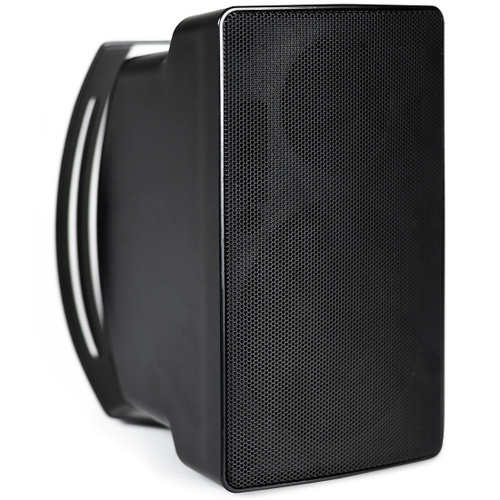
Commercial Outdoor Speaker System with 2 Pure Resonance Audio S5 Indoor/Outdoor Surface Mount Speakers and MA120BT Bluetooth Mixer Amplifier
Inside the Design This commercial outdoor speaker system delivers reliable, high-quality audio for patios, decks, outdoor dining areas, gardens, or any space requiring durable all-weather sound...MSRP: $1,260.99$1,113.99Usually arrives in 5-9 business days.
-

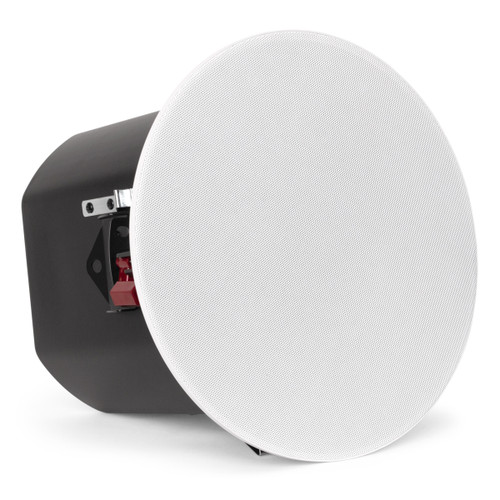
Office Sound System with 4 C8 8" 70V Ceiling Mount Speakers and RMA500BT 500W Rack Mount Mixer Amplifier
Inside the Design This office sound system combines four beautiful C8 flush-mounted 8" 70V ceiling speakers, tile bridges, and a powerful RMA500BT 500W rackmount Bluetooth mixer amplifier. Provide...MSRP: $2,448.99$2,053.99Usually arrives in 5-9 business days.
-
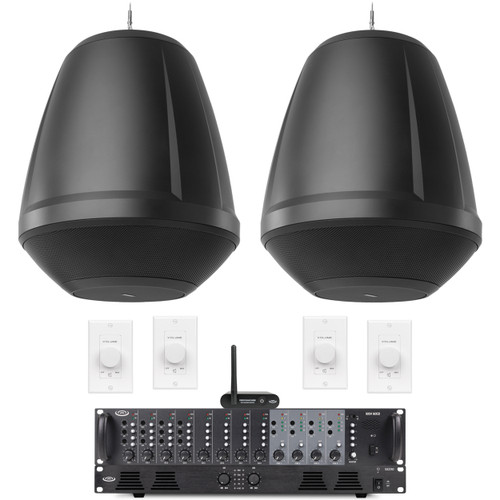

Restaurant Sound System with 2 QSC AcousticDesign Pendant Speakers, Pure Resonance Audio 4-Zone Mixer, 240W Power Amplifier, Volume Controls, and Bluetooth Music Streaming
Inside the Design This restaurant sound system provides high-performance audio for high-end applications where sound drives the atmosphere. Equipped with two QSC AD-P.HALO 6.5" 200W integrated...MSRP: $3,970.71$3,662.43Usually arrives in 5-9 business days.
-

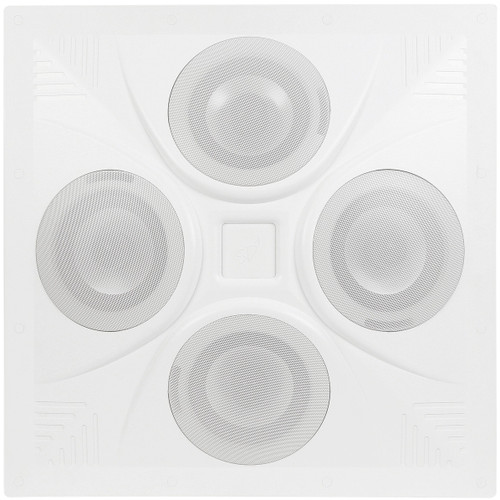
Conference Room Sound System with 2 SD4 2x2 70V Ceiling Tile Speaker Arrays and RMA240BT 240W Rack Mount Bluetooth Mixer Amplifier
Inside the Design This conference room speaker system produces incredible speech reproduction and intelligibility that provides 360° of smooth, even audio coverage. You can wirelessly stream audio...MSRP: $1,905.99$1,601.99Usually arrives in 5-9 business days.
-

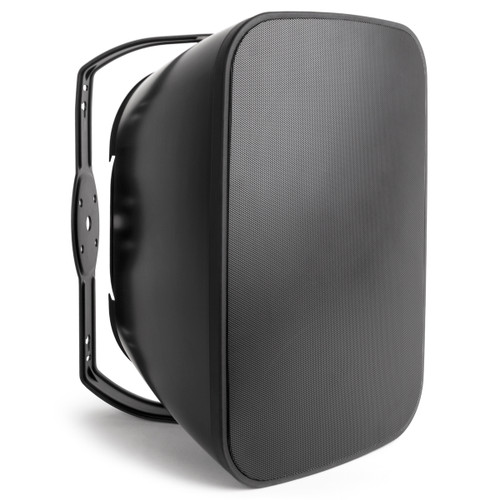
Outdoor Speaker System with 4 S8.1 8" Premium 70V Indoor/Outdoor Surface Mount Speakers and RMA240BT 240W Rack Mount Bluetooth Mixer Amplifier
Inside the Design Elevate your business with our high-quality 70V outdoor speaker system, featuring four S8.1 premium 8" weather-resistant speakers that deliver crystal-clear highs and immersive deep...MSRP: $2,480.99$2,136.99Usually arrives in 5-9 business days.
-

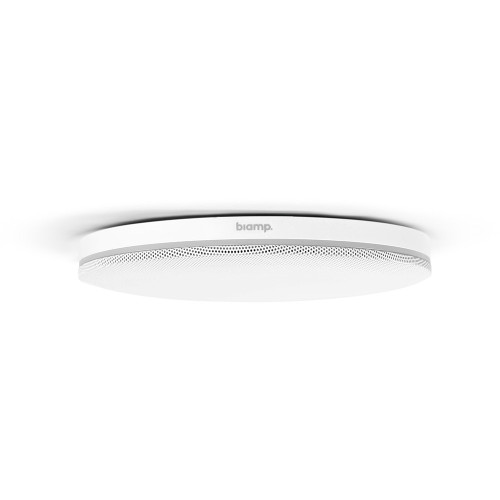
Biamp Devio SCR-20CX Web-Based Conferencing Hub with Ceiling Microphone - White
Biamp Devio SCR-20CX Web-Based Conferencing Hub with Ceiling Microphone The Devio SCR-20 is a conferencing hub that provides users with exceptional AV experiences when using web-based conferencing...$4,547.00Usually arrives in 5-9 business days.
-

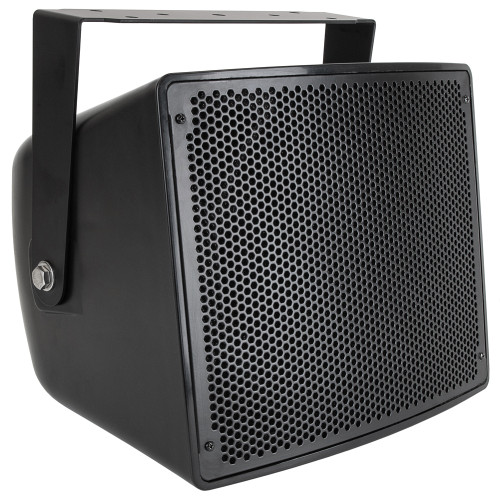
Warehouse Speaker System with 4 S10 10" 70V Outdoor Speakers, RMA500BT 500W Rack Mount Bluetooth Mixer Amplifier and PTT1 Paging Microphone
Inside the Design This warehouse speaker system is ideal for warehouses, shipping docks, factories, and a wide variety of other indoor or outdoor commercial applications. Produces superior vocal and...MSRP: $4,434.99$3,678.99Usually arrives in 5-9 business days.
-


Warehouse Sound System with S10 Outdoor Speakers, 6 C6 Ceiling Speakers, RMA350BT Bluetooth Mixer Amplifier and Paging Microphone
Inside the Design This warehouse sound system is ideal for warehouses, shipping docks, and factories with an office space. Produces superior vocal clarity and music reproduction with an S10 10"...MSRP: $3,597.85$3,056.24Usually arrives in 5-9 business days.